
In another post, I told you how to deal with the neighbors and start making sounds in your own home. Now I want to explain why those tools work — and why the way you've probably been thinking about singing has been working against you.
If you've ever looked into singing lessons, you've probably encountered a version of the same approach. Keep your hand to the plow. First, you learn technique. You study breath support and do scales. You work on vowel placement, resonance, cord closure, register transitions. Master the technique, and maybe — if you're one of the lucky few — you'll earn the right to enjoy it. Someday, eventually, when you're good enough.
I don't work that way. Not because technique doesn't matter — it absolutely does, and this site is full of it. But because that traditional order — technique first and joy later — is one of the most effective ways to never get there. I know this because I lived it.
Here's a story that still stings a little. After finishing music academy, I went to New York to study with one of the top voice teachers in the city. I worked with her for a month, then went home and practiced for six months. I knew I was improving. I could feel it in my practice room, alone, with nobody watching.
Then I went back for my next lesson, sang for her, and do you know what she said?
She told me I'd made zero progress.
I was devastated. Completely crushed. But I couldn’t deny she was right. Because every time I opened my mouth in front of her, my throat tightened. My muscles stiffened, and I second-guessed every note. All the technique I'd learned was in there, somewhere, but I couldn't access any of it. The hesitation was like a wall between what I knew and what I could actually do and the more I tried to sound good, the worse I sounded.
The traditional system I'd been trained in had no answer for this. Every teacher I'd studied with prioritized technique, leaving me to figure out the mental side that was sabotaging everything on my own.
That's when the seeds were planted for the approach I use now — one that doesn't make you wait until you've "earned" the right to enjoy singing.
My upcoming book:
Sing Anyway
My book is on the way. Everything I know about turning a Little Mouse into a singer who owns the stage.
Sing for the Joy
So, finding joy matters. But how? I'm not about to tell you to look in the mirror and say I love my voice three times. It's more practical than that.
When you enjoy singing — when you're in the moment, feeling the music, not monitoring yourself — your jaw relaxes, your throat opens, your shoulders come down. About half the technical things a singing teacher would ask you to do start happening on their own.
Nothing creates tension quite like the thought: “I need to get this right.” Just ask my voice in that New York lesson. Not that technique is bad, but leading with technique creates the very tension that prevents it from working.
Now, I should be clear about something. The joy I'm talking about is already inside you. It's the reason you sing in the shower, or hum along in the car, or get a lump in your throat when a melody hits you just right.
That feeling is the joy I'm talking about.
The problem is that hesitation, self-judgment and a ton of questions sit right on top of it, letting all that tension flood back in.
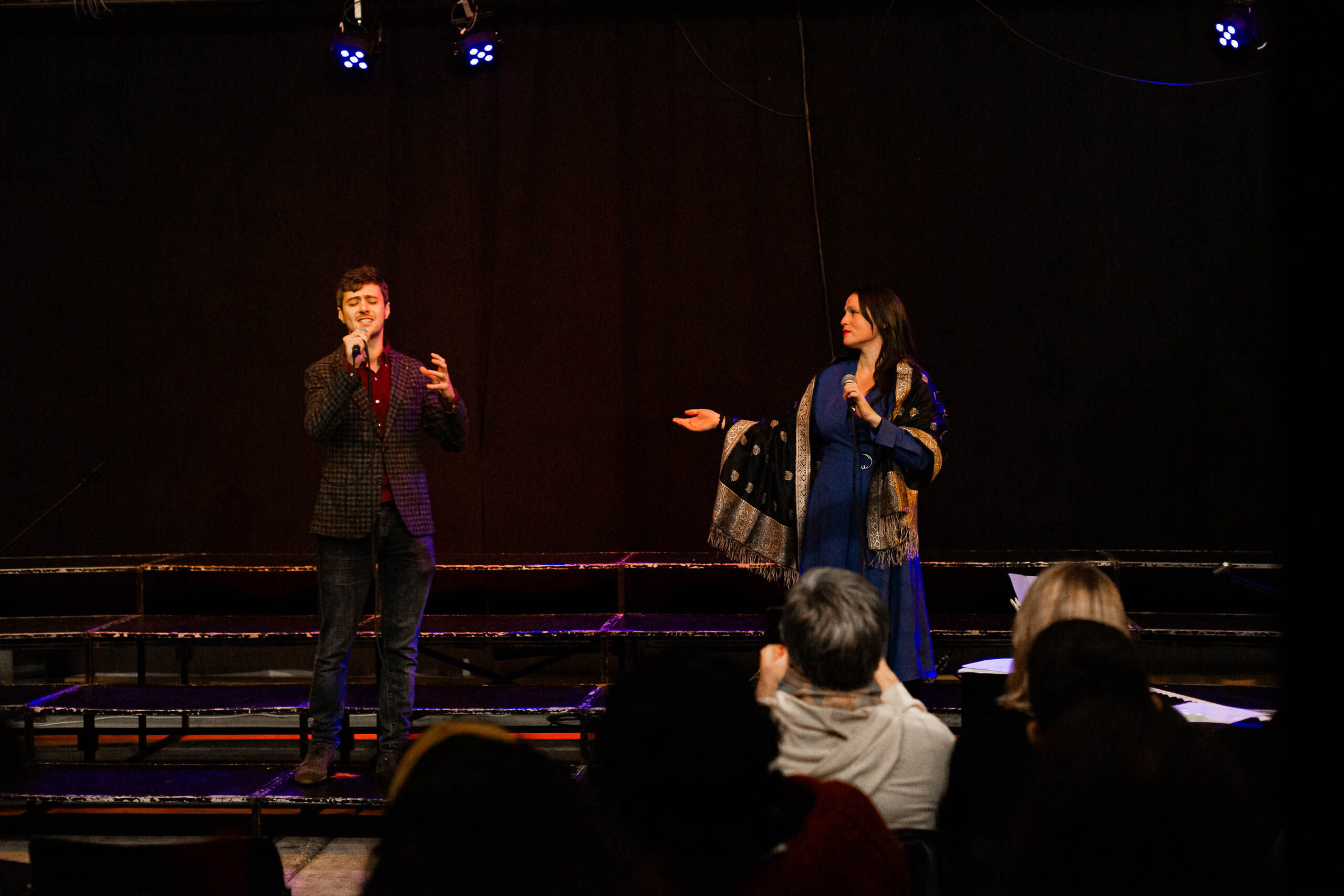
No Brain, No Pain
I discovered what singing without hesitation sounds like completely by accident.
Years ago, I was working on a comic opera show with a colleague. One of my characters was a beginner singer — someone who had no idea what they were doing. So I was supposed to sing badly. I made stupid faces, used ugly noises, didn't think about placement or breath or any of the things I'd spent years learning.
And what came out was some of the best singing I'd ever done.
I stood there, baffled. And then it clicked: for the first time in ages, I was *out of my own head*. I wasn't planning the sound before I made it. I wasn't adjusting mid-phrase. I wasn't judging. I was just… making noise. And that was exactly the state in which everything I'd ever learned could finally come together.
In my method, I call this principle *No Brain, No Pain*. It's the idea that your brain, while essential for learning technique, becomes your biggest obstacle the moment you start *performing* that technique. The vast majority of my students — and I'm no different — are afraid to sound bad. So they overthink everything. And that overthinking creates a tiny but devastating moment of hesitation just before the sound comes out.
The jaw clamps shut and the new technique you've been practicing is gone.
There are actually three moments of hesitation, and they can destroy a perfectly good singer:
- The first happens just before you start singing. You take a breath, and in that split second before the sound, your brain goes: “Wait. Am I going to do this right? Is it going to sound okay?” It’s the equivalent of pushing on the brake before you start pedaling the bike. That tiny pause is enough for your throat to tighten and your muscles to brace.
- The second moment of hesitation happens during the singing. You're mid-phrase and a thought enters: “That note wasn't great. I think I'm flat. My jaw feels weird.” And suddenly you're questioning your singing while it's happening. Which, predictably, makes it worse.
- The third moment of hesitation happens after. The moment you finish and immediately start beating yourself up: “Why do I suck so bad? I know what I'm supposed to do, so why can't I do it?” Not only does this ruin your mood, it programs your brain to expect failure next time. And that makes the first moment of hesitation even worse.
It’s a vicious cycle.
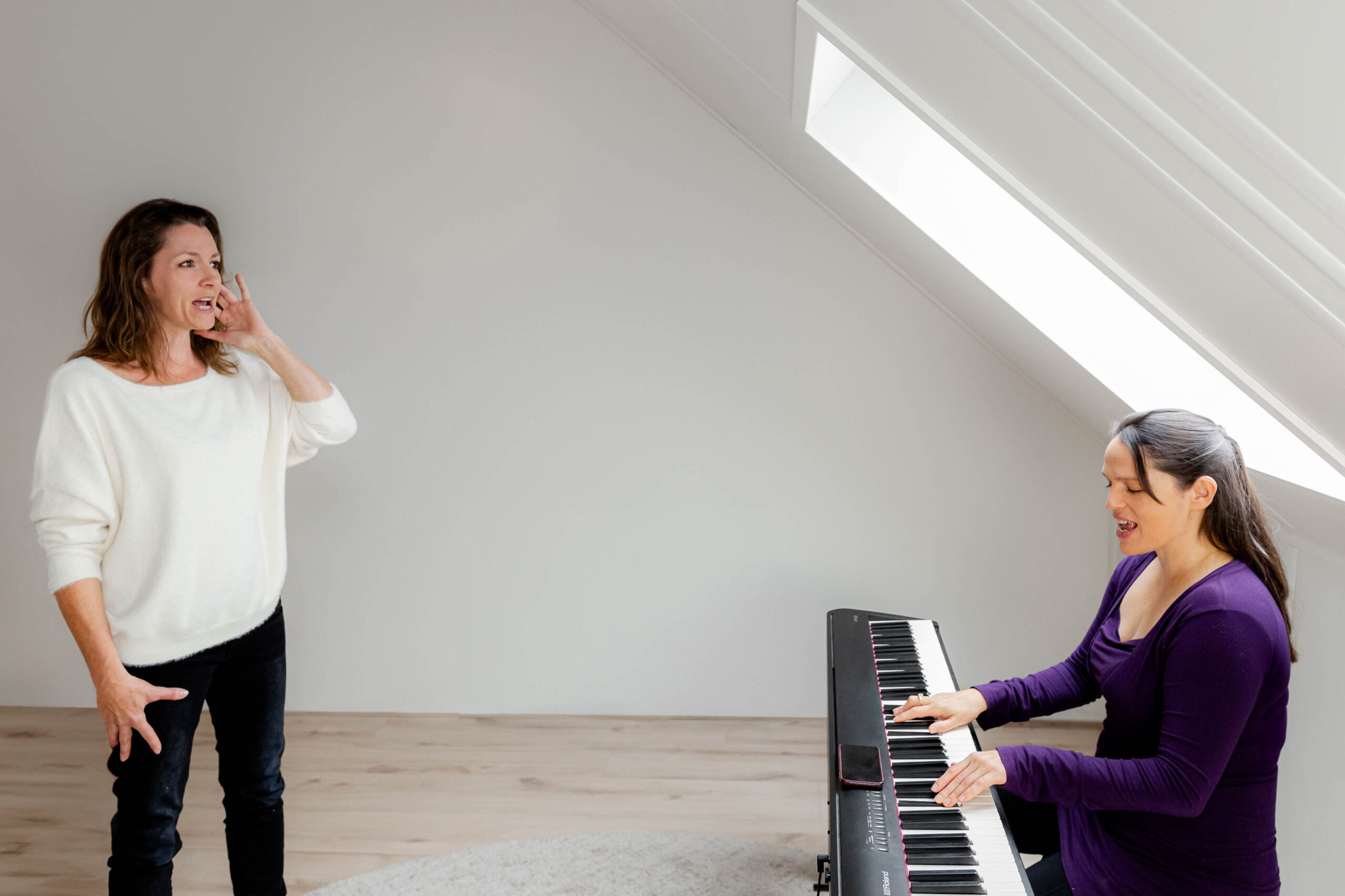
Ripping Off the Band-Aid
So, how do you break this cycle?
You must learn to think about your technique before you sing, during the inhale. That's your planning moment. What exactly you plan will depend on what you're working on, and we'll get to that. For now, the principle is what matters: all your thinking happens before you open your mouth.
And then you go. Immediately. I call it Ripping off the Band-Aid: you count to three, and start on two. You begin before your brain has time to hit the brakes.
During this phase, you don't stop and you don't slow down. You just go. And after the phrase, that's when you evaluate: calmly, specifically, using a system I'll teach you later.
This is the approach that will underpin everything in my system. No matter what technical tool I teach you — it only works if you approach it this way. Plan, then launch.
***
Here's the deal I want to make with you, right at the start of this journey.
I’m going to teach you technique, and plenty of it. We're going to dig right into your vocal anatomy, your breath, your resonance, your range, your high notes, all of it. But we're going to do it inside a framework where the love of singing comes first and your busy brain learns to get out of its own way.
For me, learning to get out of my own head was what actually changed my singing.
That's what I want for you, too, but first I want to show you the instrument you'll be playing.
My upcoming book:
Sing Anyway
My book is on the way. Everything I know about turning a Little Mouse into a singer who owns the stage.