Or get your digital copy for free! (pdf)
Already have the book? Get your bonus material,
such as an easy songs list, and a practice roadmap
In the Media
Conversations about Sing Anyway
As part of the book tour, I sat down with some wonderful hosts to talk about fear, the inner critic, and finding your voice. Here's where you can listen in.
-
Curious Vocalists · with Grace Hancock
Vocal Coaching Essentials
We talked about the teaching side of singing — how to guide students past performance anxiety without feeding quick-fix culture, why a teacher doesn't need every answer on the spot, and how to keep the work sustainable for both student and teacher.
-
Singing Teachers Talk · BAST, with Alexa Terry
Overcome Fear & Build Confidence
We talked about singing confidence and stage fright — what happens when you stop chasing a "good" sound and start exploring what your voice can actually do, and the mindset shifts that move fearful singers past self-doubt.
-
Vocal Revolution · with Katie Rose
Overcoming Stage Fright
We talked about overcoming stage fright — how to feel the nerves and actually enjoy them, quiet the inner critic, and balance practice with performance so you can sing anyway.
-
Listen at johnhenny.com
The Intelligent Vocalist · with John Henny
Sing Anyway
We talked about the fear, shame, and self-doubt that stop so many people from singing — how one negative comment can shape a singer for years, and why separating "technique mode" from "performance mode" helps you reconnect with the joy.
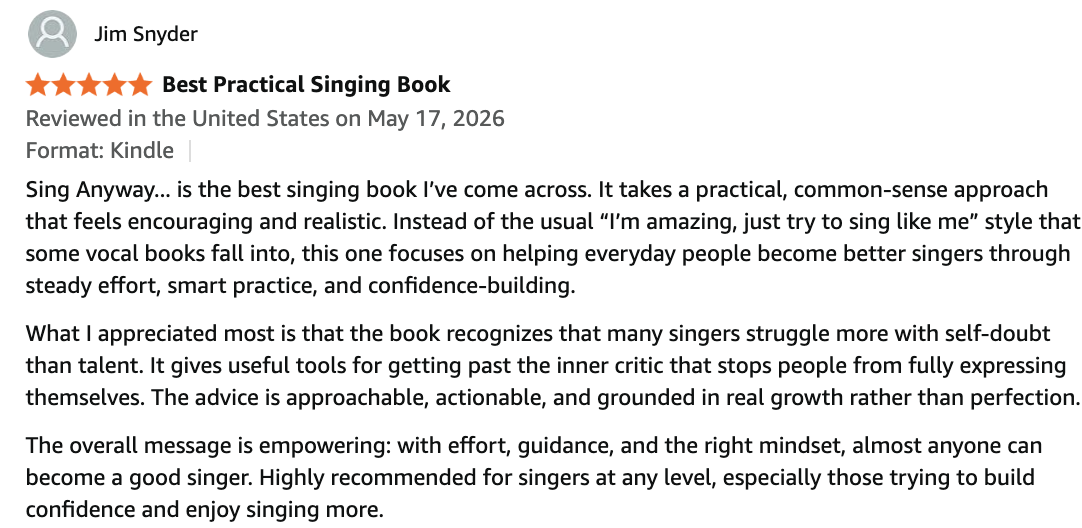
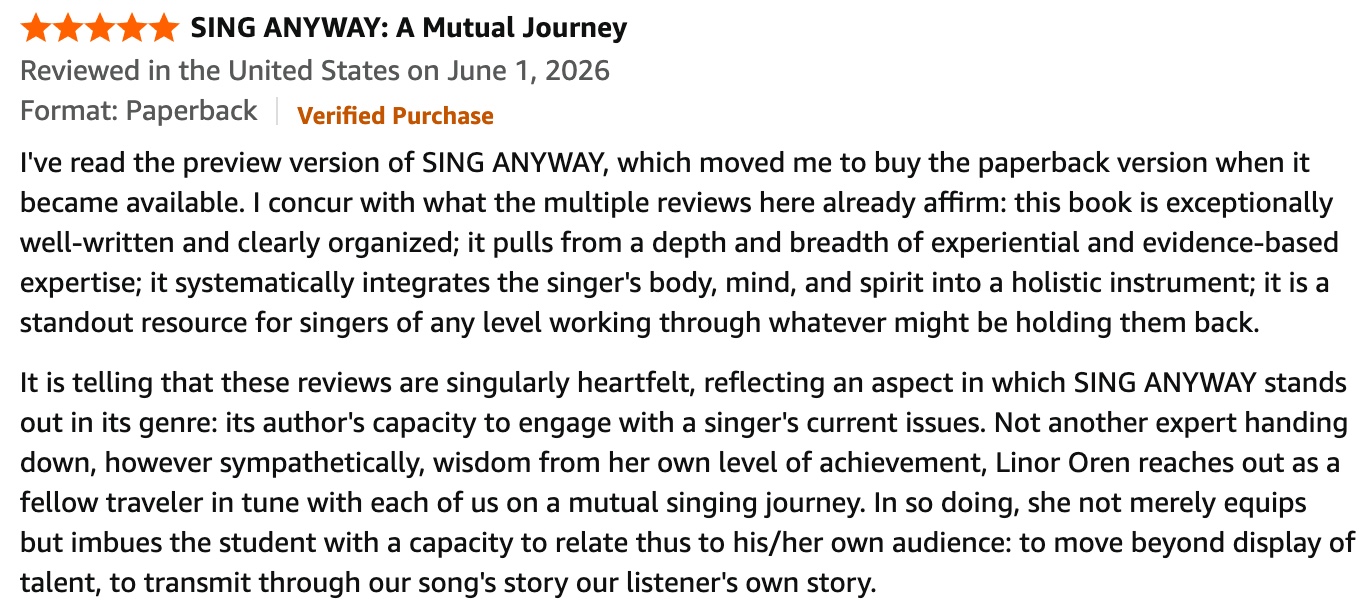
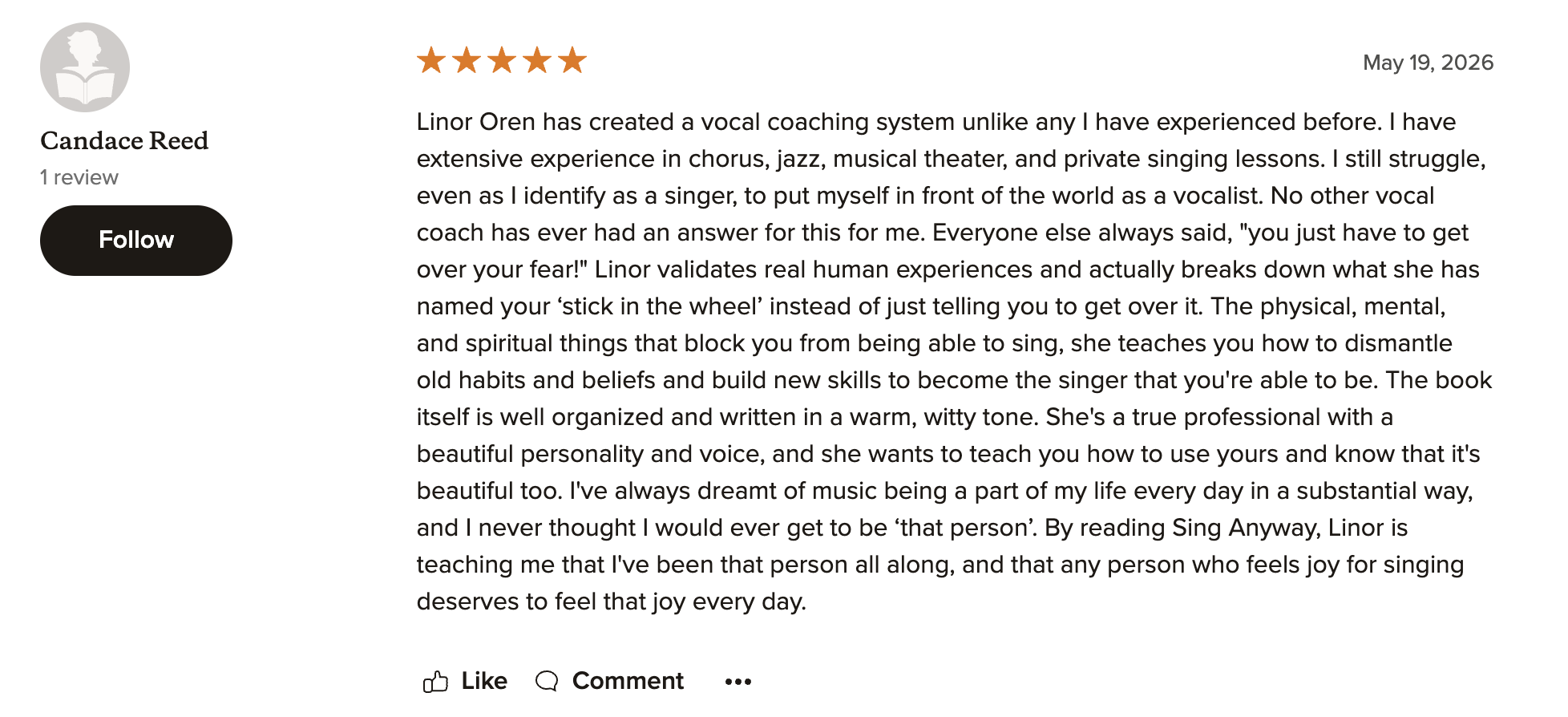
Praise for Sing Anyway

“
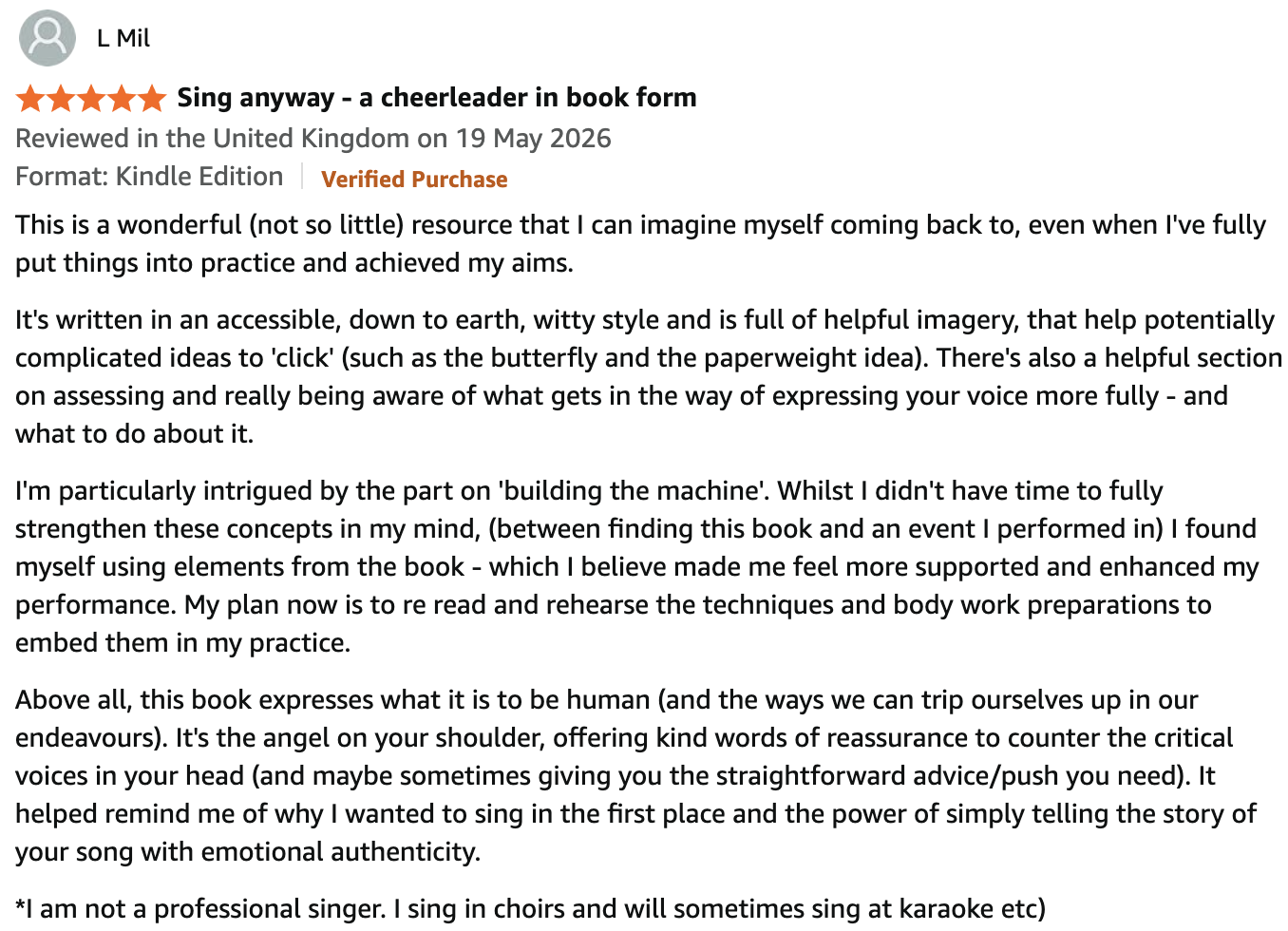
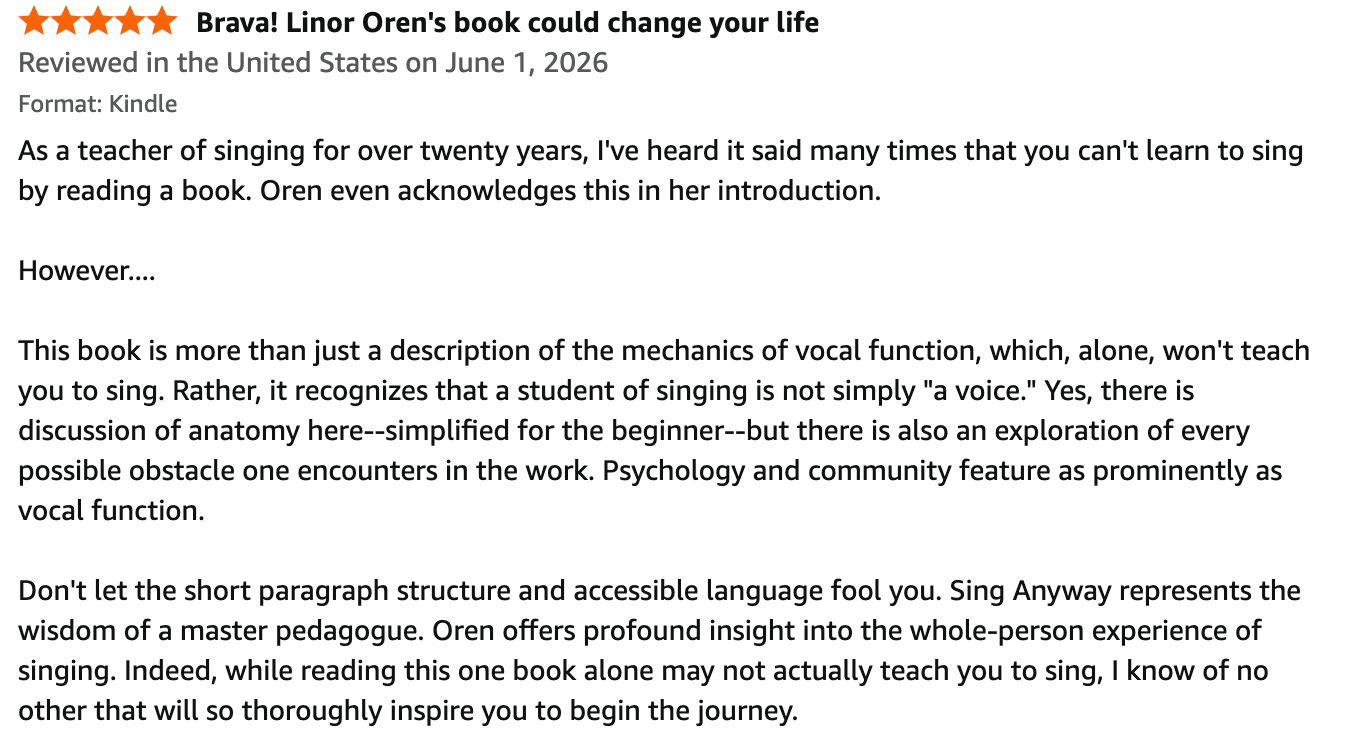
"You'll likely feel in safe hands immediately. What I also appreciated is where Linor chooses to begin. Rather than launching into anatomy and vocal exercises, she starts with mindset — something which can sometimes be relegated to the final chapters of a book on singing. There was a lovely balance struck throughout part one between empathy and accountability. We're encouraged as singers to give ourselves permission to take up space, while also gently challenging the excuses that maybe sometimes we hide behind.
The technical exercises themselves are practical and approachable. They're clearly aimed at helping singers experience change rather than overwhelming them with theory
"That word permission appears throughout the book, and I think it's one of its strengths. Singing can feel overwhelmingly complex, and giving people permission not to fix everything at once is incredibly valuable. One of my favorite quotes in the entire book was: "Let's face it, there are so many facets to singing that our number one goal should not be losing our minds."
Alexa Terry from Bast training - singing teachers talk
Read the full review and / or watch the podcast episode