
Most singers spend months preparing their voice for a performance and about zero minutes preparing how they'll actually be on stage. The walk-on, the first note, the ending, where to look... these things feel like they'll sort themselves out on the day. They won't. Or rather, they will sort themselves out, just not necessarily in your favor.
Dr. Ido Ariel — the best pianist and coach I've worked with — once gave a presentation at the Jerusalem Academy of Music and Dance about how a performance should begin, continue, and end. Everything he said seemed obvious in hindsight, but so many of us were guilty of ignoring all of it.
A quick note: my training is classical, so what follows leans formal. If you sing pop, rock, or anything less structured, the principles are the same, but you'll have more freedom. More movement, more interaction with your band. Adapt accordingly.
The Walk-On
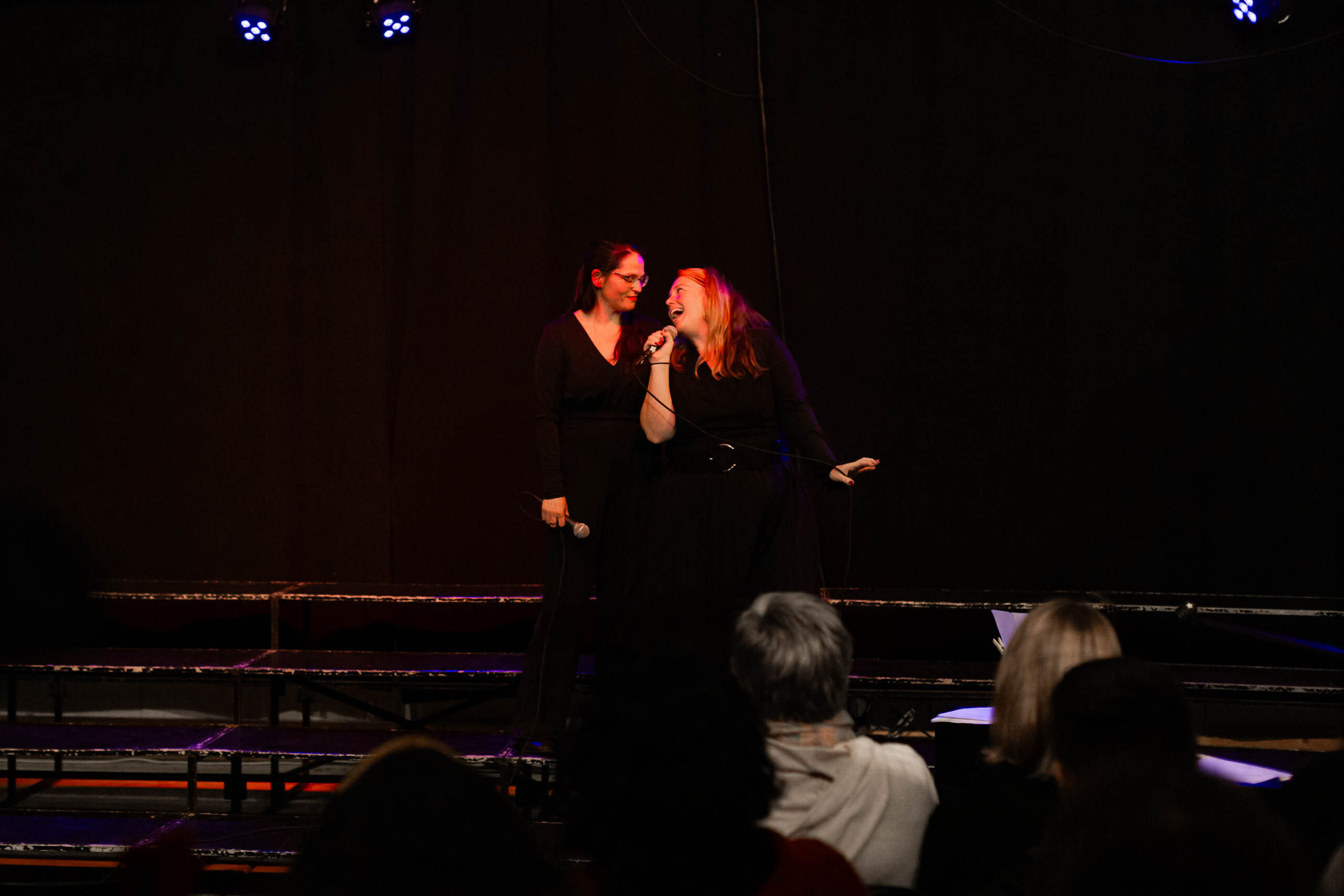
When you step on stage, take a slow, calm pace. Smile. Even if part of you doesn't want to be there (and that's completely normal) your face doesn't have to broadcast it. Look at the audience, look at your accompanist, and smile at them too. This takes about five seconds and it changes the entire energy in the room.
The Start
Take a moment to concentrate before anything begins. People think making the audience wait looks unprofessional. It's actually the opposite: you look more in control when you take your time. Close your eyes, look down, do whatever helps you get into the mood. When you're ready, look up and look ready. That's the cue for your accompanist. If it's a band setup, gesture the beginning.
Between Phrases
If there's an instrumental section, even a short one, you're still performing. Stay in the song. Don't check your music, don't look at the floor. And if your accompanist is rushing or dragging, don't try to conduct them — just lead with your singing. If you're consistent, they'll follow.
The Ending
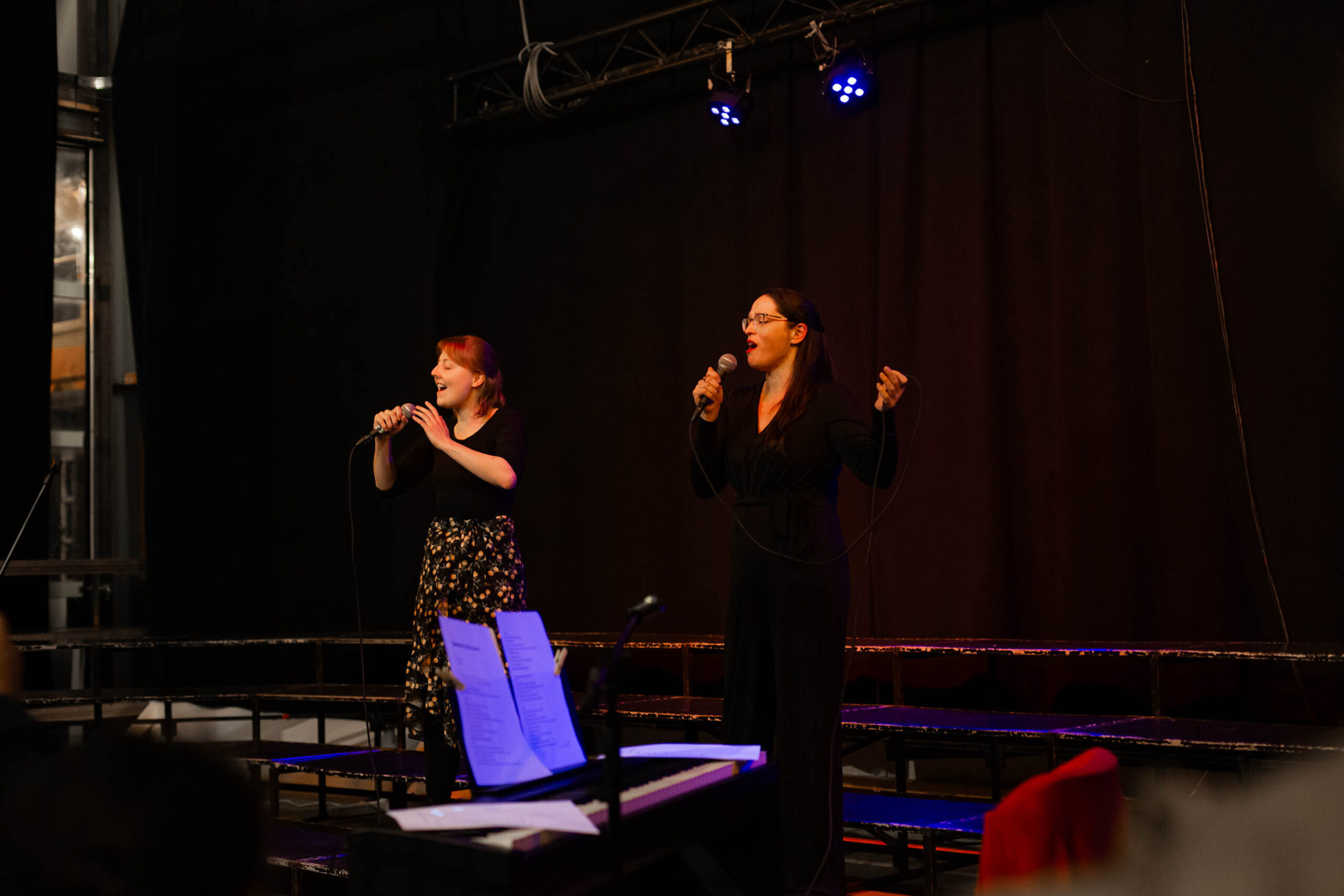
This is where good impressions go to die. When you sing your last note, you are not done. Keep expressing. The number one mistake I see: people bolt the moment the song ends and in two seconds undo everything they built. If the accompanist is still playing, stay in the mood. When the applause starts, hold the feeling for one more second — then release and receive it. The applause is the audience's gift to you. Take it in. Acknowledge your accompanist.
(And a note for anyone recording a friend's performance on their phone: keep recording through the applause. That's the best part.)
Where to Look
Choose a point just above the audience's eyeline. They'll feel addressed directly without you locking eyes with anyone. Shift your gaze naturally from spot to spot — not too high, which reads as nervous, and not too low, which loses contact with the room. If you do make direct eye contact with someone, one second is the maximum. Longer and it starts to feel like a staring contest, which is uncomfortable for both of you.
The through line in all of this is that a performance doesn't start when the music starts and it doesn't end when the music ends. The moment you walk on stage, you're performing. The moment the applause fades, you're done. Everything in between — the silences, the transitions, the in-between moments — is part of what the audience experiences.
All of it is coachable. It just requires knowing what to do, and then doing it enough times that it becomes second nature.
My upcoming book:
Sing Anyway
My book is on the way. Everything I know about turning a Little Mouse into a singer who owns the stage.