Tired of being a little mouse?
The online group program for shy singers who are done waiting
Join this new community and pay $140 $120 per month

Champness Jack
singer-songwriter
"Far and away the best I've ever taken — after 4 paid courses and years of one-on-one lessons"
The Little Mouse Syndrome — and why it's not just about singing
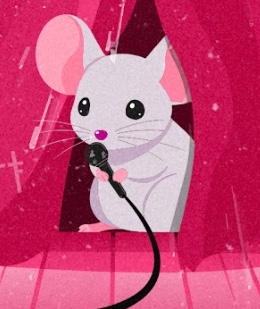
Many of my singing students didn't dare to sing out loud when they came to me. I ask them: what is the purpose of your voice? In an important sense your voice IS you. If you shush it all the time, you're being a little mouse.
I know that feeling, because for the first twenty-one years of my life, I kept my singing voice bottled up inside me, thinking who would want to listen to that?
I call this The Little Mouse Syndrome, and it's not really about singing. It's about living your life on mute, because somewhere along the way, you became convinced that your voice wasn't worth hearing.
And then the years go by
I get emails almost every week from people in their fifties, sixties, seventies. They write to me almost like they're confessing something: "I've always wanted to sing, and I know it's probably hopeless, but…" The oldest new student I've ever taken on was eighty.
Your love for singing is not going to politely pack its bags and leave just because you've ignored it for a decade or three. And one day you'll be the one writing me that email. Why not write it now?
What if your voice could surprise you?
The obstacles you've assumed were permanent — the fear of being heard, the cracking on high notes, the breath running out, the sound coming out smaller than the one in your head — those aren't who you are. They're habits. Habits built up over years of telling yourself your voice wasn't worth listening to.
Habits can be replaced. That's what we do in The Make Singing Click Club.
'‘I landed two roles in musical productions.’'
"The Make Singing Click Club is one of the greatest investments I’ve made. It is a resource I will always go back to as a singer to work on certain issues. Thanks to Linor's coaching, I landed two roles in musical productions in Amsterdam."
Seisa (38)
front-end developer and amateur musical singer
Introducing... The Make Singing Click Club
An online program with a clear practice roadmap, live group sessions, and my feedback

You get...
- Immediate access to my flagship online course Make Singing Click: 70+ video lessons that take you from where you are now to a voice you actually like.
- 2 monthly live group calls — coaching, Q&A, and low-pressure singing in front of others when you're ready.
- A private community space where members share progress, ask for help, and cheer each other on between calls
Join this new community and pay $140 $120 per month
Champness Jack
singer-songwriter
Over the years I've taken 4 highly regarded paid online courses, one paid offline course, and a few years of one-on-one voice lessons. While those lessons all helped, progress was pretty glacial. The Make Singing Click Club is far and away the best I've ever taken.
I knew entering the Club that good support is crucial, and that muscle tension is a killer. But the translation of that knowledge into better singing had been elusive and slow. We are often simply unaware of habits that block our progress. For the first time, I now have me a set of tools to detect, isolate and correct the problems.

Orion Dyson-Smith
singer/songwriter // nurse anesthesist
"I have an analytical mind, and other singing teachers had told me before: don't overthink it. But that doesn't work just on command. Linor has a balanced approach — she gives exercises on how to not overthink while singing. Whereas before, I liked singing but didn't really enjoy practice, these days I can't wait until the next session and I try to find time."
The Traditional way versus the CLUB way
I do things different than the traditional way of voice coaching. If you’ve tried the “old way” and felt stuck, it’s not because you lack talent or discipline - it’s because the method was missing the ingredients that create real change: structure, support, and momentum.
Traditional way: Putting out fires
Your jaw is tight this week, so you work on the jaw. Next week your high note cracks, so you work on the bridge. It's all reactive. Two years can go by without ever touching a fundamental skill, because it was never the most pressing thing in the room.
My way: A clear system
We start with a roadmap, not the loudest problem. We identify your biggest "sticks in the wheel," remove them one by one in the right order, and only then move on. When something clicks, we scale it up — because I don't do tiny progress.
Traditional way:
You’re stuck between lessons
You leave the studio with good intentions. Then you're alone for seven days. Maybe you practice the wrong thing and reinforce a habit your teacher will have to undo next week. Maybe you don't practice at all. Either way, you walk back in and the first ten minutes are spent figuring out where you even are.
My way: Feedback from me
You're never really alone. Ask a question in the community, or bring it to the next group call. The little problems get caught before they become big ones — while your body still remembers what it just did.
Traditional way:
Singing as a lonely enterprise
It's just you and a teacher in a small room, week after week. No one else is in the trenches with you. You don't get to watch someone else struggle with the same thing you're struggling with and see them work through it.
My way: The masterclass + community
We work in groups. When you watch another singer wrestle with the exact thing you're stuck on, your brain rehearses the solution alongside them — that's the masterclass effect, and it's one of the fastest ways to learn. Plus you're not the only one showing up. People are cheering each other on, and that's contagious.

Nadia Tomova
Amateur Singer and data analyst
I'd been taking real-life lessons with Linor when she launched the course. She was the first singing teacher I fully trusted. I felt totally comfortable singing in front of her — I'm timid in those situations.
I remember one early moment of insight while watching a course video. It was about killing the moments of hesitation — how to trick yourself to not tense up before a note. I recorded myself several times and could actually hear the difference.
Between lessons I use the course to drill in one technical aspect, so I can skip the basics and focus on the interesting stuff, like phrasing. The Club course has saved me a year's worth of voice lessons.
Last week I was jamming with a jazz pianist. It was a lot of fun. Only afterwards I realised: I didn't worry about how I sounded. I'm not saying I sounded amazing, but it felt amazing. That's a huge difference from 1.5 years ago.
Radha Natasha Kadic
amateur opera singer and composer // Co-Founder of Sat Yoga Ashram, Costa Rica
Before Linor, I'd had three different singing teachers, and I was overwhelmed by the partly overlapping, partly conflicting advice. I saw Linor in a reaction video on YouTube and I loved her energy — not hyped up, not prima donna-like. I trusted her.
I'm a thinker. I like complexity in all fields, but in singing it had interfered with my ability to perform what I have inside.
The Club simplifies things. It was a reality check too: everything I'd been avoiding all these years in terms of basic skills, she told me to do.I'd been studying for 10 years and I was tired. It had begun to feel like a chore.
Linor finally unified what I knew about singing and gave me a roadmap.In a recent performance, thanks to Linor's course and lessons, I sang like a resurrected being. The exact tricks from her course, elaborated in private lessons, made the performance stellar — internally and for the audience."
The 3 Pillars of The Make Singing Click Club
They work together to accelerate your progress.
1. access to video lessons, 24/7
No more random practice where you pick whatever feels interesting that day and hope it adds up. The course is 70+ video lessons organized into modules, each one designed to get you to a specific mental or technical milestone. You always know what's next, and why it's next. Watch and practice on your own schedule, in your own home.
2. Two live calls per month, in a no-judgment space
The first monthly call is with me. It's a blend of vocal coaching, performance practice, and mindset work. You can bring whatever's getting in your way that month, and I'll point you straight to the lesson in the library that addresses it. The second monthly call is just the Club members singing for each other in a low-pressure space. This is where you discover that performing isn't actually as scary as your brain has been telling you.
3. feedback that catches problems early
Between calls, you're not on your own. Ask me written questions inside the course and I'll answer them. There are also two points in the course where you send me a short video of yourself singing, and I record a personal video back, walking through what I see and what to adjust. This is the "shorter feedback loop" in action: you don't sit on a problem for weeks waiting for the next call.
"Not in a Million Years" — and other things my students have said before they sang
He looked at me like I had just asked him to walk a tightrope over Niagara Falls. All I had said was: "Would you like to try singing in front of the group?"
His face froze. His eyes widened. He shook his head.
"Not in a million years."
This was Elias (not his real name) at his very first online group session. To him, the idea of singing in front of other people wasn't uncomfortable. It was unthinkable.
So we didn't push. He came back the next session and just watched. And the one after that. He listened to the others sing, watched them get coached, watched them survive it.
A few sessions in, almost without deciding to, he sang.
A few weeks after that, I asked him how it felt. He smiled. "It was great. I actually enjoyed it."
I paused. "Elias, do you hear what you just said?"
He laughed. "I made a mountain out of a molehill. I thought it would be a disaster. It wasn't. I was scared. But I survived. And it got easier. It felt good to just share the music."
I've watched this exact transformation happen more times than I can count. The student who walked in saying "not in a million years" is the same student who, six months later, is the one volunteering to go first.
If you're reading this thinking that's nice for Elias, but I'm a special case, my fear is real — I hear you. Elias thought the same thing. So did I, when I was twenty-one and only sang in empty rooms. The fear is real. It's also smaller than it feels right now, and it shrinks every single time you sing in front of someone and survive it.
That's what the group sessions are for. Not performance pressure. Not impressing anyone. Just a place to find out, in the safest possible setting, that you can do this — and that it feels good.
If you join today, by this time next month you'll have watched the lessons that address the things actually in your way, done two group calls, and gotten personal pointers from meon your singing.
If it's not for you, you cancel. No awkward conversation. You keep what you learned.
$140 $120 per month
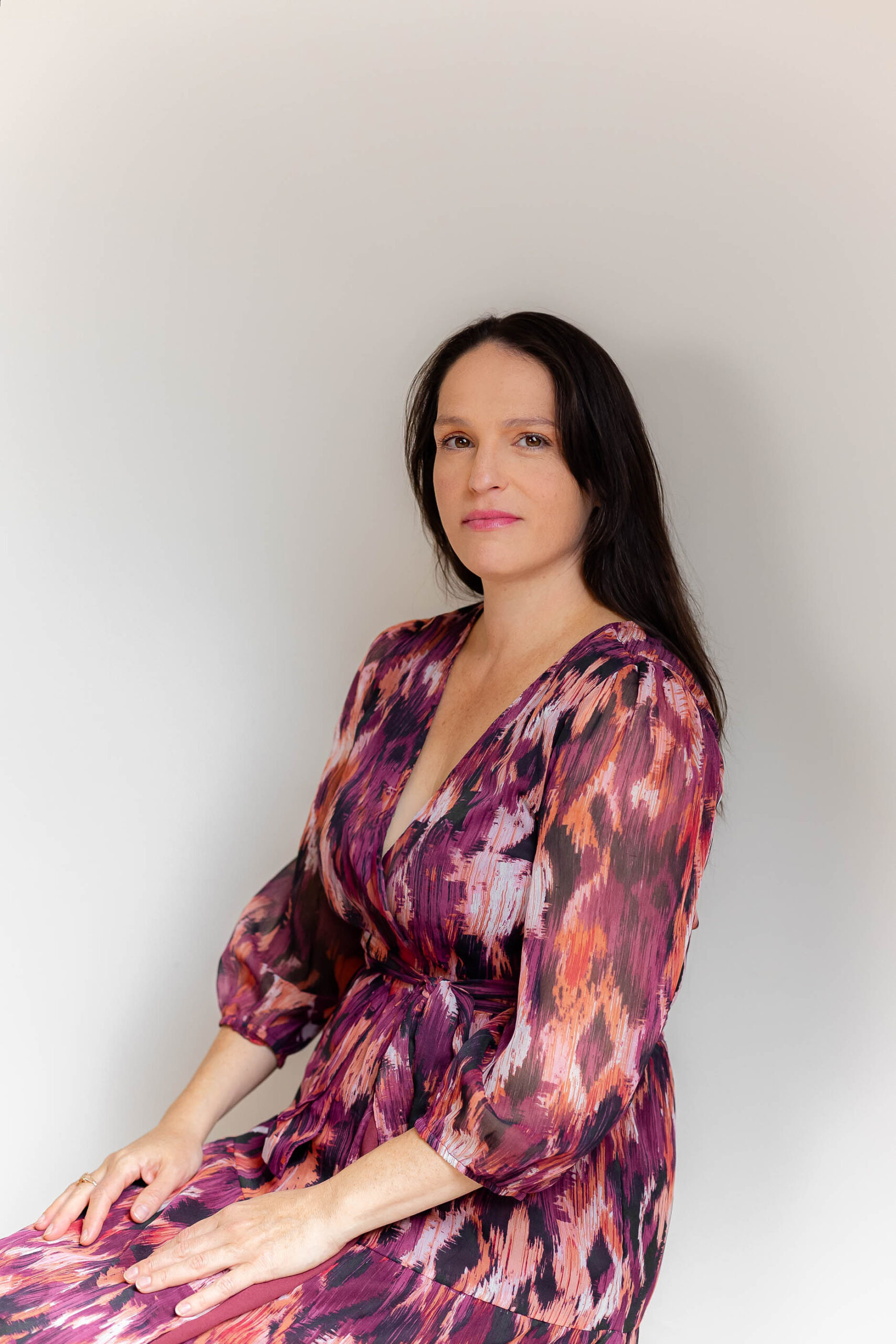
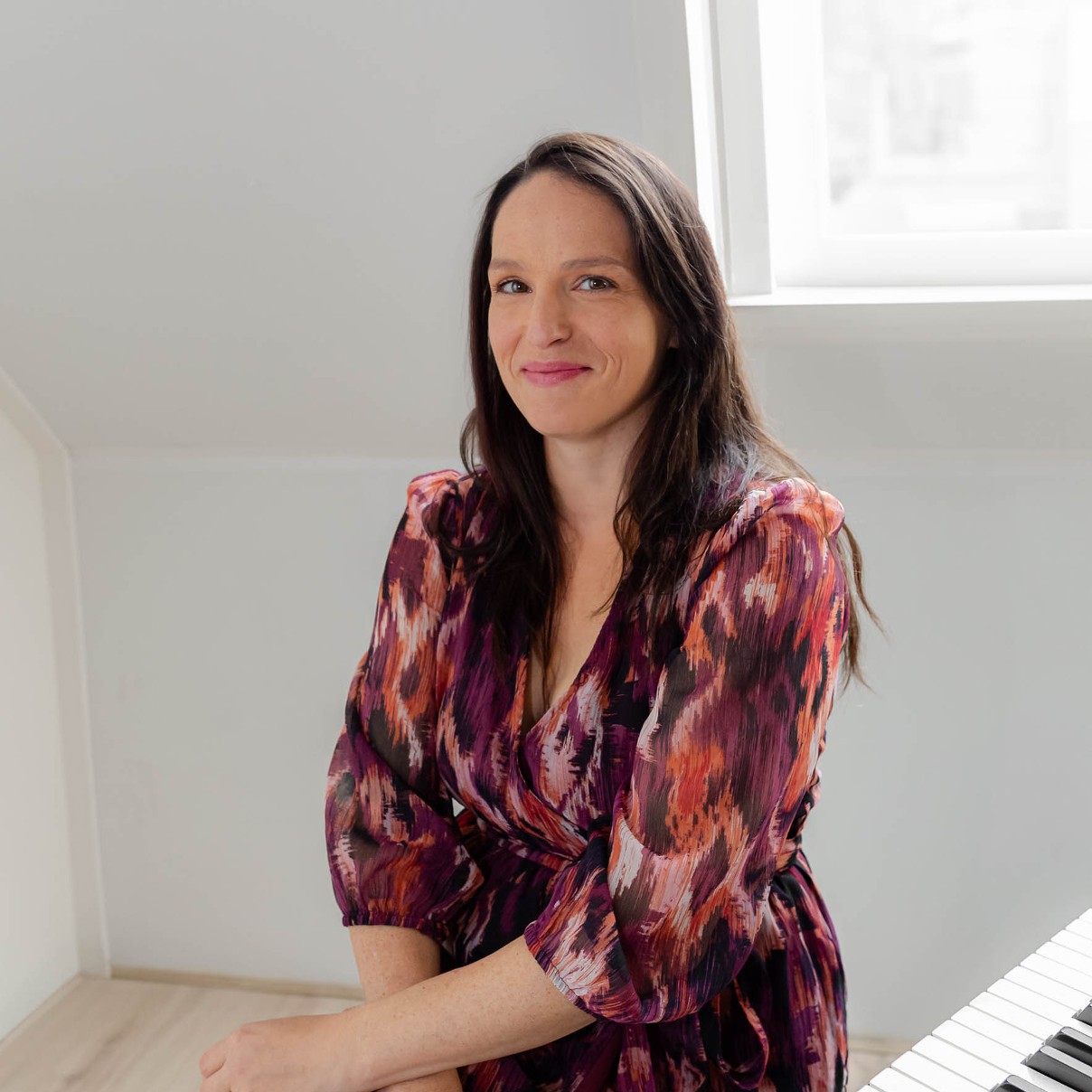
About Linor, Guide on your Vocal Journey
I started singing lessons at twenty-one. Late, by music-conservatory standards — and that turned out to be a gift, because it means I know exactly what it's like to walk into a studio terrified of the sound that's about to come out of you.
I trained at the Jerusalem Academy of Music and Dance, then moved to Berlin in 2010 to study with some of the best opera teachers in Europe. But the real turning point wasn't the teachers — it was when I started figuring out why their corrections worked, and turning that into a system anyone could follow. That's when my own voice broke through to a professional level. I went on to perform in opera and music theater, including an 80-day tour of Das Phantom der Oper.
Then I started teaching. Over 400 students later, I've worked with absolute beginners, frustrated intermediates, and a fair number of 'tough nuts to crack.' I cracked them. Not because I'm a magician, but because the system I built is good at finding the specific thing in your way — and removing it.
This program is that system, made available to you.
The benefits go beyond singing - they transform you
No longer in your head
Learn my shoot-first-ask-questions-later method that eliminates the hesitation which stops you from singing freely. I'll give you a fun and productive alternative to hesitating, over-thinking, and beating yourself up before every note.
No more 'vocal issues'
Meet the 'enemies of your voice' and deal with them: the areas in your body that are blocking your airflow. We'll identify them and pull them out one by one. You already have a voice. It's just caged and shackled. We'll free it.
Firing on all cylinders
I'm greedy. I don't do tiny progress. We're going to make a real, big change across all the pillars of a great voice — louder, healthier, bigger range, more endurance, less airiness — and we're going to do it without you working harder. The opposite, actually.
Singing practice is fun
After finding your 'bright spots' and placing them in a clear structure, you'll know exactly what to do each session. I help you find the right songs to practice with — songs you actually love singing. Very motivating.
Your personality blossoms
Exploring your voice makes your personality blossom, no matter what your goal is. Once you have made a habit of expressing yourself, it translates to other areas of your life. The little mouse is gone.
A toolkit for life
Everything I teach you is meant to outlast the Club. By the time you've worked through the system, you'll know how to spot your own sticks in the wheel, how to design your own practice, and how to keep getting better on your own. You won't need me forever — and that's the point.
Catherine
Not her real name — kept private at her request
Singing means everything to me, but my voice never really worked properly. I had classical classes, then modern classes, and the methods totally contradicted each other. I was even more lost than before I started. I used to only work on my voice when I went to classes — just follow the teacher. I never took ownership of my own learning.
With Linor, that completely changed. She told me from the start to practice between lessons, monitor my own progress, pay attention to how I felt more than how I sounded.
Slowly but surely, the magic happened. I was able to properly close my vocal cords for the first time ever. I used to choke regularly while drinking or eating, and that almost completely stopped.
I do a lot of public speaking for work, and I used to lose my voice after every conference. Now I warm up before every event and I don't have to stop speaking for days afterwards. For the first time in my life, I trust I can make progress with my voice.
Alisa Kirichenko
amateur singer // researcher
I had been taking real-life lessons with Linor for 1.5 years when she launched her online course. At first I was sceptical — I had no experience with online singing courses. I was immediately impressed.
A big part of the course systematically goes through the obstacles on our way to a free voice, with detailed solutions. It helped me recognise and name the issues — as opposed to jumping to the conclusion "I suck at singing," which I used to do.
I work in education, and the learning strategies Linor uses are the same ones known in my field to produce consistent progress. The combination of private lessons and the online course made my at-home practice much more structured, which helped me progress faster.
Some of the singing secrets I'll reveal
The Roadmap: so you always know what to do next
One of the most common things I hear from singers, before they start with me, is: "I don't know where to start.Or I do random exercises from YouTube and have no idea if any of it is actually helping."
The Practice Roadmap exists to end that feeling forever.
It's both a video and a downloadable file, and it lays out exactly what a practice session at home should look like: how long it should be, which bodywork to pick that day, how to warm up properly, what vocal technique to focus on this session — and, importantly, how today's session fits into your total vocal journey. So you're never just doing exercises in a vacuum. Every session builds on the last one and prepares the next one.
Bonus: A Toolkit for Singers Who "Can't Sing in Tune"
I've put quotes around "can't sing in tune" because in the hundreds of singers I've taught, almost every single one who walked in convinced they were tone-deaf turned out to be no such thing. Real tone-deafness is rare. It affects about 4% of the population. The other 96% of "I can't sing in tune" people are not tone-deaf. They're just operating with sticks in the wheel that nobody helped them find.
Here's the surprising part: in my experience, singing in tune doesn't get fixed by trying harder to control the pitch. It usually gets worse when you do that.
What works is the opposite — letting go of the tight grip on the melody, building awareness of what your voice is actually doing, and clearing the physical obstructions that are throwing your pitch off in the first place. Once those are gone, the pitch tends to find itself.
This is one of the things I teach differently than most voice coaches I've watched, and it's one of the most rewarding things to work on with a student — because the moment a "tone-deaf" person sings their first clean phrase, the look on their face is something I never get tired of seeing.
$140 $120 per month
faq
I teach all styles. Most of my students like to learn pop or musical singing.
A laptop or phone with a camera and a decent internet connection. That's it. No microphone, no studio, no app subscriptions. If you can join a Zoom call, you can do everything in the Club.
All calls are recorded and the recordings stay in your library. You can watch them on your own schedule, and if you have a question about something you saw in a recording, you can bring it to me and I'll answer it. You can then watch the recording for my answer.
The Club works fine alongside private lessons. A lot of my Club members started this way — they kept their existing teacher and used the Club for the structure, the community, and the between-lesson feedback that one weekly slot couldn't give them. After a few months, some of them stayed with both. Some moved fully to the Club. Both are valid.
You'll feel something different in your first week — usually a release of tension somewhere you didn't know you were holding. Real, visible progress usually shows up in four to eight weeks, depending on how much you practice and how big the sticks in your wheel are. Six months in, my students are routinely doing things they would have called impossible the day they joined.
The Make Singing Click Club is a monthly subscription. You can cancel at anytime and will keep access to the benefits for the remainder of the month.
After at least six months of subscription, you will keep lifelong access to all the current and future online material. You won't be able to attend the live events anymore.
I get this question all the time, and I want to answer it carefully because I know it's the one that takes courage to ask.
Almost every singer who has ever come to me believing this turned out to be wrong about themselves. Real damage to the vocal cords is uncommon, and if that's what you're worried about, an ENT doctor can check it in a single appointment. But for the vast majority of people who feel like their voice isn't good — including the ones who haven't sung out loud in years, including the ones who were told as children that they couldn't — what's actually happening is that the voice is in there, fully capable, but caged in by physical and mental habits that built up over decades.
We work on those habits. Slowly, gently, in your own time. And one day you'll sing a phrase and it will sound like you, and you'll wonder where that voice was hiding all this time. That moment is what I do this job for.
Stage fright isn't a problem in the Club. It's the most common thing my students bring with them. The majority of people who join are scared, to some degree, of being heard. Some of them are terrified.
So we don't push. In the live calls, you can sit in and watch for as long as you need to. No one will call on you. You sing when you're ready, and not a moment before. Most people find that "ready" arrives much sooner than they thought it would, just from watching others go first and seeing that nothing bad happens to them.
If you want a longer answer, scroll up and read about Elias.
Act on your love of singing
"Many of the singers who come to me are afraid of singing. On stage, in front of friends, sometimes even in their own homes — they worry the neighbors will overhear them.
That was me once. As a teenager, I only sang in empty bus shelters. The fear of being heard was unbearable. But the urge to sing was just as strong, and I couldn't make it go away.
My first singing lesson, at twenty-one, was the moment everything cracked open. My teacher encouraged me to just play with my voice, and express whatever came out — something I had never, in twenty-one years, allowed myself to do.
I ran home afterwards, buzzing on dopamine and adrenaline, and I realised the feeling was the same as the one I'd had after my first kiss.
Twenty years later, I'm still teaching, and the people who write to me most often are in their fifties, their sixties, their seventies. They write almost like they're confessing something. And the line that comes up again and again is: "I've avoided singing all my life. I can't wait any longer."
Whatever age you are right now, that's the line you'll write to someone, someday, if you keep waiting.
Don't wait."
Your vocal coach,
Linor Oren
$140 $120 per month